

May 2026 Reads
Italo Calvino, Karl Ove Knausgaard, Haruki Murakami, Sarah Waters, Alba de Céspedes, Missouri Williams, Ethan Rutherford

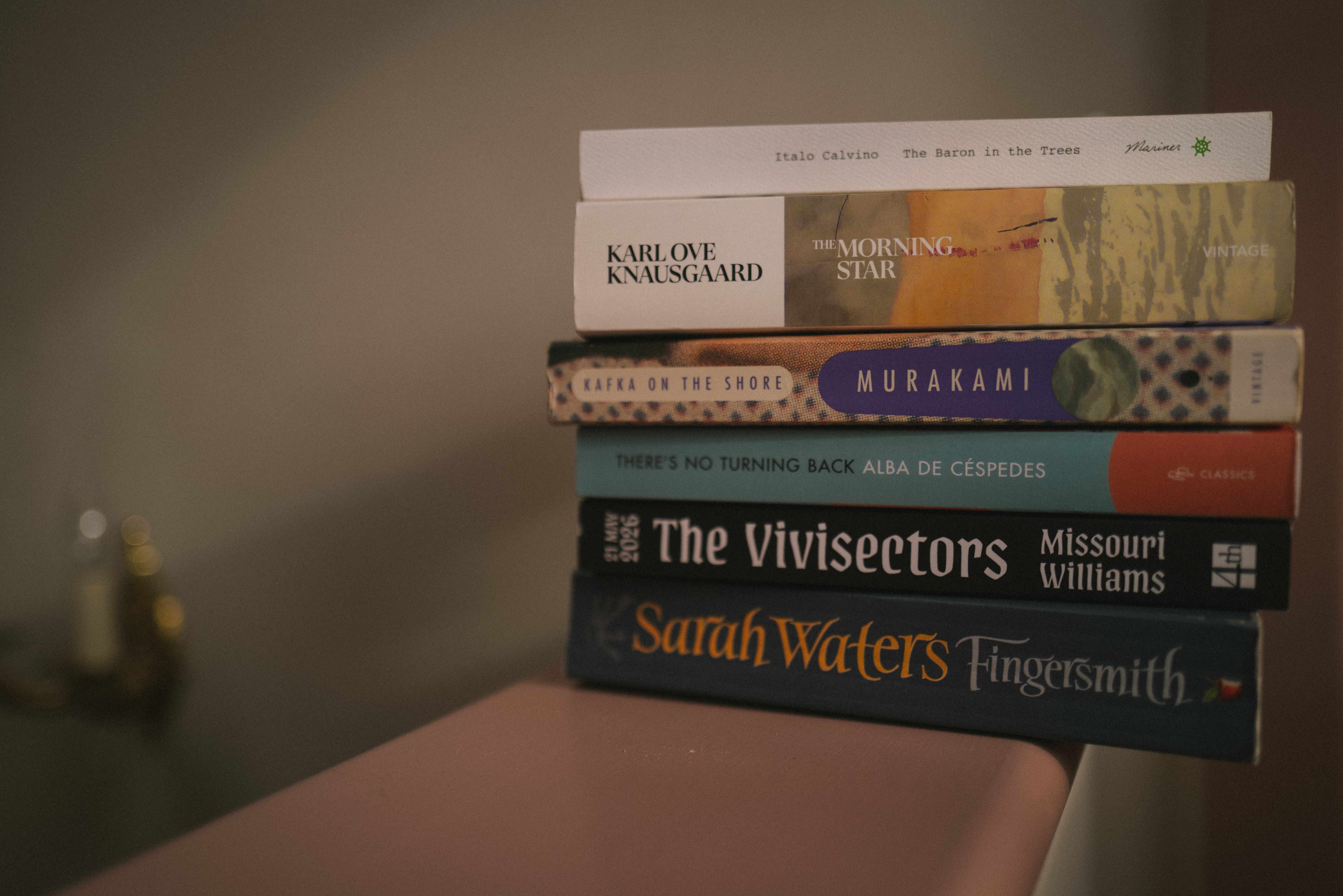
Fewer books this month, but some of them rather chunky. The two Italian novels I read on the glorious reading retreat I hosted at the beginning of May. I hope to organise another of these for next year, so keep an eye out for details if you’d like to join!
I’ll be sending out an introductory post soon with all the information you need, but I wanted to remind you that the Little, Big slow read will be running again live to your inboxes from the 17th June. I hope you’ll join us!
Finally, Londoners should join us for Books on Film on July 16th to watch No Country for Old Men. We read the book, we come together to watch its adaptation, it’s a great time. Tickets here.
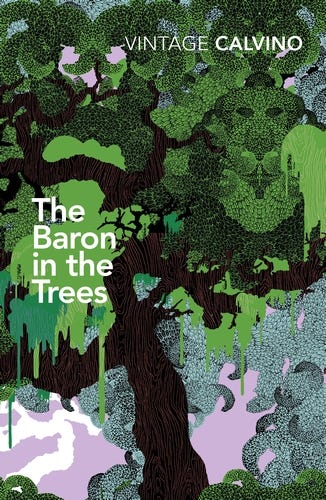
The Baron in the Trees by Italo Calvino, translated from Italian by Ann Goldstein (1957) – 320 pages
In June 1767, twelve-year-old Cosimo of a noble Italian family refuses to eat the snails his sister has prepared for dinner. For this act of disobedience, he is banished from the table. But in childlike fashion, he goes one better: he not only leaves the table and the room but quits the house entirely, climbs an oak tree in the garden and quite simply never comes down again—living as the “baron in the trees”.
I didn’t know what to expect from this book, knowing Calvino for his famous and surreal Invisible Cities. I certainly didn’t expect it to be so much fun. Apparently, Italy is so well forested at this time that Cosimo can travel pretty far from his home, and he gets into all sorts of adventures over the course of his life: he encounters bandits and pirates; he develops systems for hunting and eating and his ablutions; he even takes a lover or two. Calvino is known for being a fantasist of sorts, and this book reads like speculative fiction, as we explore the world Cosimo finds up in the trees.
One of the most effective choices is to have the novel narrated by Cosimo’s little brother, grounding it in a distinct voice and point of view. Many elements are totally absurd—I particularly enjoyed any and all descriptions of their malicious, disgraced nun of a sister—but are delivered in a deadpan register, often making the book very funny.
This is a real gem of a novel—it’s deliciously fun, but it’s also an interesting concept that has been fully realised. Apparently there are others (The Cloven Viscount/The Nonexistent Knight), so I know exactly what I’ll read next. (Shoutout to Jamie in book club for suggesting we read this on the reading retreat—it was such a success!)
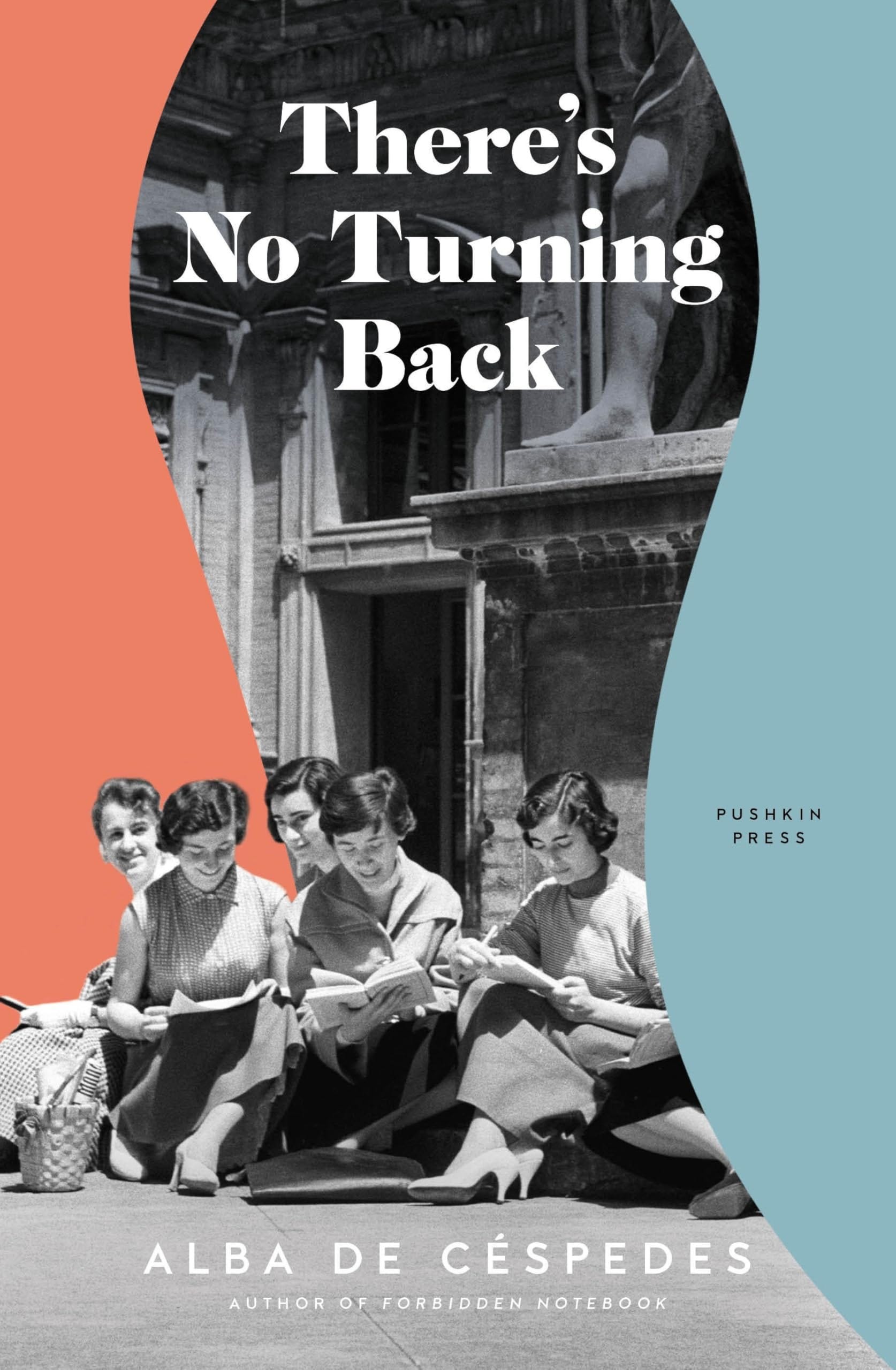
There’s No Turning Back by Alba de Céspedes, translated from Italian by Ann Goldstein (1938) – 304 pages
At a boarding house in Rome, eight young women are entering a strange, transitional time in their lives. Away from their families to study at a nearby university, they are accorded some semblance of freedom for the first time, though the nuns that run the boarding house do operate a strict curfew. They are not yet wives or mothers or spinsters; they are, for the time being, only themselves. We follow these women (though one or two more than others), as their lives slowly drift from one another. There’s the rich girl who’s ostensibly living there to study, but in reality is using this as a cover to visit her illegitimate daughter housed in a convent nearby. Another girl doesn’t want to return to her family and a restrictive life after failing her exams, so she runs away, only to fall in with a group of shady men. Another is taken under her professor’s wing and is marked for life as a lonely intellectual, and yet another churns out bad feminist novels warning women not to go down the conventional path.
The novel, despite an extensive publicity campaign upon its publication in 1938, was banned a few years later by the fascist authorities, mostly because it portrayed young women not fulfilling the fascist ideal of wife and mother. As a demonstration of the limited freedoms of Italian women at the time, both within and without the novel, I thought this was an interesting and worthy read. De Céspedes moves with ease between her characters, and her psychological portrayals are strong. It has a cool, reserved style to it which never quite grabbed me entirely, and meant that I found the book more interesting than I did engrossing. But I would be interested to try her more famous novel, The Forbidden Notebook.
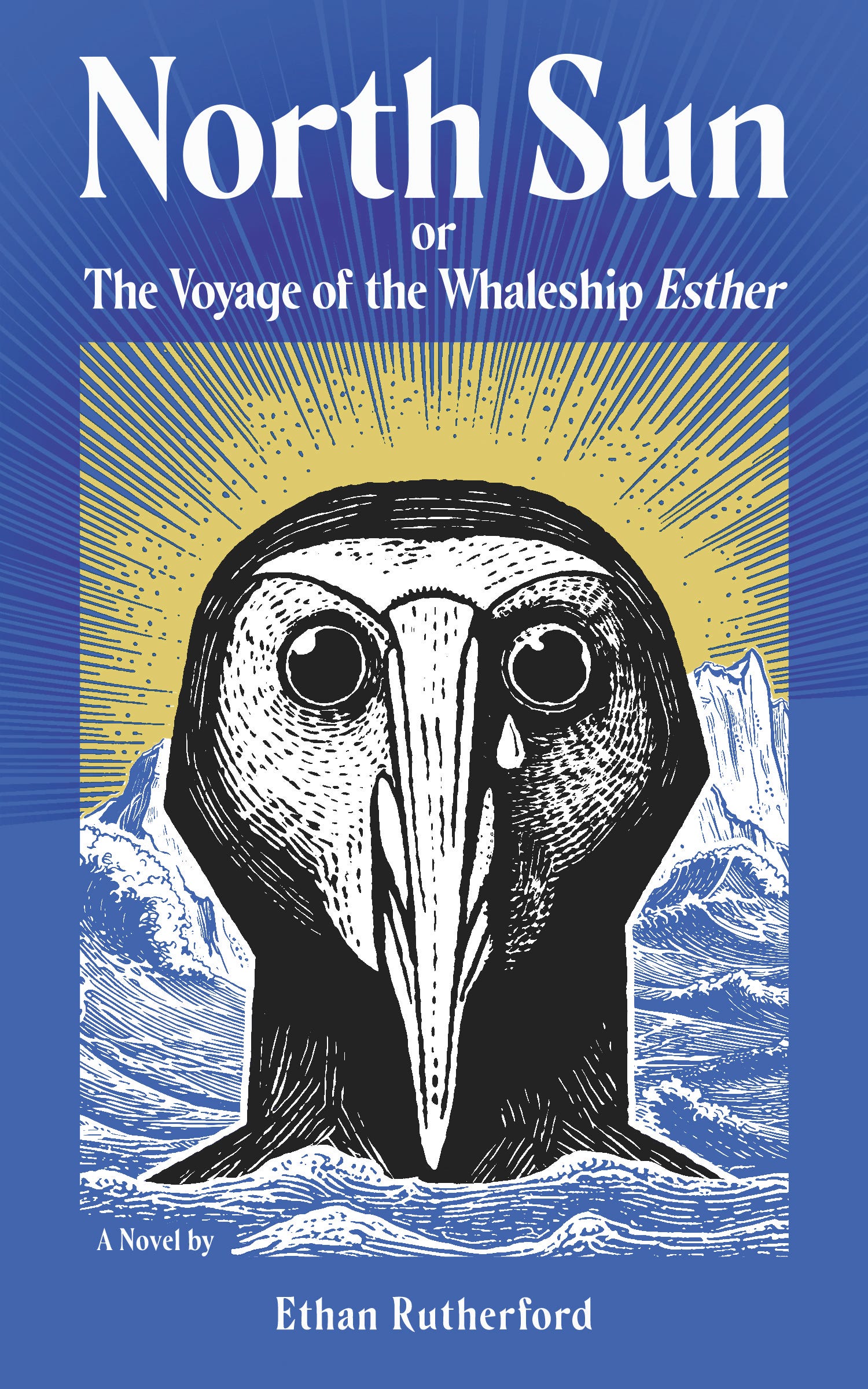
North Sun; or, The Voyage of the Whaleship Esther by Ethan Rutherford (2025) – 386 pages
It’s 1878, and Captain Arnold Lovejoy—a whale hunter living in a world where most of the whales have already been hunted—is handed a note while on the Arctic ice from the captain of the Dromo. The note explains that the Dromo has been crushed, its cargo brought ashore, and its captain intends to stay in the north. Back in New Bedford, Lovejoy delivers this note to the ship’s owners, the Ashleys, and is given a new assignment—travel back north on the Esther, another whale ship (after travelling south to hunt whales), and retrieve something important from the captain of the Dromo that has been lost.
This novel caused a bit of a critical stir when it came out, becoming a finalist for the National Book Award for Fiction, and I can see why—it is ambitious and unusual when compared to the (dare I say it?) sea of samey literary fiction. In short vignette-like chapters, we follow the crew of the Esther around the world, on what seems at times a deeply unlucky ship. As the crew become increasingly isolated, strange things begin to happen. You may remember I read Rutherford’s short story collection last month, which comprised a selection of fabulist tales with strong horror overtones.
Unfortunately, though this blend of historical and speculative fiction should have been perfectly suited to my taste, I didn’t entirely get on with it. The style felt overworked to me, trying to summon atmosphere from the very first page when that should have been something earned over the course of the book and allowed to grow. The best books of this kind have this sort of oscillation or dynamism to them—and his short stories managed rising and falling tension very well—but this felt more one note because of that commitment to a singular tone. The pace also slackened, feeling too meandering for what the style demanded—it probably would have worked better for me as a condensed novella.
Interestingly the story I liked the least from the collection was also a historical expedition on the ice (though this time in the Antarctic). From what I’ve read so far, Rutherford is best at dealing with modern life in an uncanny way, rather than historical fiction where it feels lacking in groundedness and depth. I don’t think it helped that I had just read Susanna Clarke’s brilliant selection of historical speculative fiction stories, The Ladies of Grace Adieu, where she strikes that balance perfectly. I would definitely read more from Rutherford, though, and I’m keen to see what he does next.
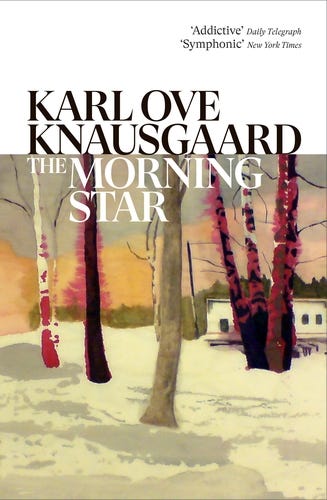
The Morning Star by Karl Ove Knausgaard, translated from Norwegian by Martin Aitken (2020) – 688 pages
My first Knausgaard—surprising in quite a few ways. The novel is set over the course of about forty-eight hours, when a new star appears in the sky. We meet nine characters, and each chapter is narrated from a different one’s perspective—some we encounter only once, while others we meet with multiple times. Each is dealing with their own tumultuous lives when a number of strange, uncanny things occur, all against the backdrop of the celestial turmoil above them. Arne is trying to hold his family together as his wife and the mother of his children descends into a manic episode, only this time she seems to have turned unusually violent toward the family cats. Kathrine, a priest, begins to question her marriage on a flight home from a conference, and then finds herself performing a funeral for a man she met the day before, a funeral that has been booked for a week. Solveig tries to balance the responsibilities of her aging mother, her job as a doctor and surgeon, and her somewhat distant daughter, when one of her dead patients revives on the operating table. Some of these characters’ lives overlap but many of them—at least in this volume, which is the start of a seven-part series—do not. The novel is a heady mix of the mundanities of their lives, alongside the inexplicable.
I was expecting some pretension from Knausgaard, but I found there to be surprisingly little. It was compulsively readable in many spots, and there was real narrative tension in the personal lives of the characters, let alone some of those horror elements that he introduces—as I was expecting him to care little for those things like ‘entertaining the reader’, this surprised and delighted me. To be sure, it does get philosophical at points, which will undoubtedly try some readers’ patience, but overall I found it an engaging read, and I liked the exploration of faith in the modern age. Because the central idea seems to be: what if biblical miracles happened today? I liked the fact of the conclusion being that most people would do absolutely nothing, and would continue worrying about their personal lives.
But there was also an unevenness to the quality. The chapters from the young people’s perspectives, particularly, were sometimes excruciating. Whilst I appreciated the flow and the way certain ideas or images would recur in an almost rhythmic fashion, I felt sometimes it lacked the depth I was expecting, especially at the line level. Many of its ideas were explicated, instead of run through the prose or story of the book itself. I’ll have to keep reading Knausgaard to fully understand his style, but given I found this one a breeze to get through, I’ll likely continue this series and find out.
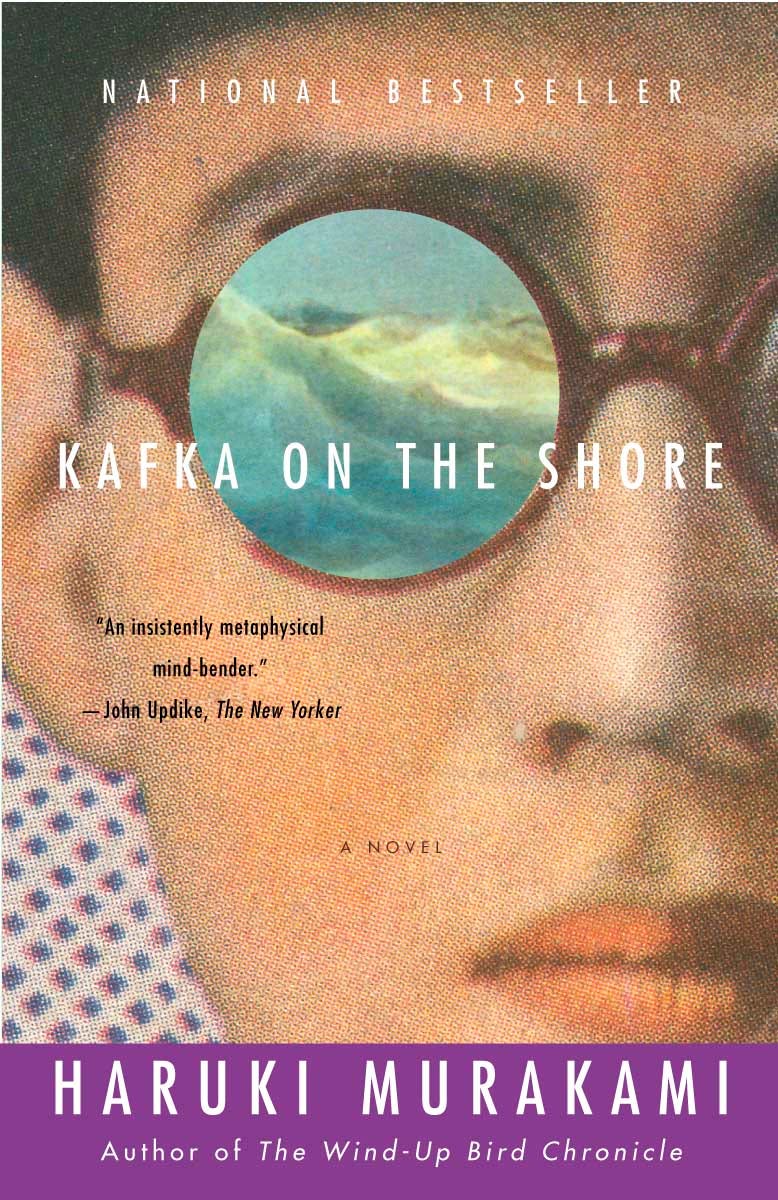
Kafka on the Shore by Haruki Murakami, translated from Japanese by Philip Gabriel (2002) – 505 pages
There are two main threads to this much-loved Murakami novel. In one, fifteen-year-old Kafka Tamura runs away from his Tokyo home and his abusive father, and heads to western Japan where he takes refuge in a library. In the other, the protagonist is an elderly man named Satoru Nakata, who never recovered from a mysterious accident he experienced as a child. Since then, he hasn’t been able to read or form complex ideas but he can talk to cats, which makes him the ideal neighbourhood cat-finder. Whilst enquiring about a particular cat, he is unexpectedly invited into the home of a shadowy figure dressed as Johnnie Walker, and is inadvertently set on a fateful path of his own which seems as though it might intersect with Kafka’s.
It’s been several years since I last read Murakami, and I found this novel to be quite disappointing on multiple counts. It was generally engaging—though most certainly a little long—and it flowed well, but it failed to expand on some of the interesting themes it gestured towards, which ultimately made it a frustrating experience. In both parts the voice lacked concision and clarity, which when married to the loose structure and the clumsy retelling of the Oedipal myth (this is Murakami after all . . . ) made it feel almost juvenile at times. From the opening chapter:
Sometimes fate is like a small sandstorm that keeps changing directions. You change direction but the sandstorm chases you. You turn again, but the storm adjusts. Over and over you play this out, like some ominous dance with death just before dawn. Why? Because this storm isn’t something that blew in from far away, something that has nothing to do with you. This storm is you. Something inside of you. So all you can do is give into it, step right inside the storm, closing your eyes and plugging up your ears so the sand doesn’t get in, and walk through it, step by step.
This reads a little like something you might have found on Tumblr in 2012. Handled a different way, the sandstorm image might have been effective, but as it is everything is just a little too spelled out, and a little too overwrought, to be effective. By the end of the novel, there are one too many loose ends to really feel like Murakami had any salient point, above and beyond exploring his own dreamscapes.1 In its strange combination of literary ambition (and philosophical content, though here in Murakami-like fashion we have a sex worker quoting Hegel between blowjobs) and innate naivety, it reminded me of my experience reading the Knausgaard. But this one I think you could safely skip.
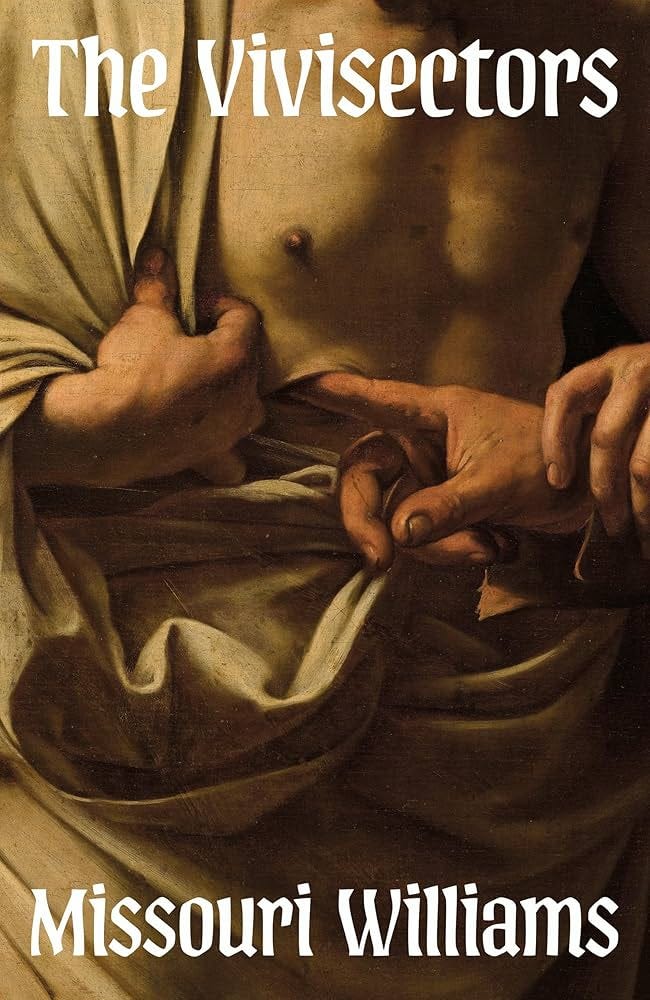
The Vivisectors by Missouri Williams (2026) – 288 pages
I reviewed this for The Sunday Times here, but in brief Missouri Williams remains an exciting and ambitious author in this follow-up to her remarkable debut, The Doloriad, though it’s not a complete success. The novel is narrated by a young woman named Agathe, who is from an unnamed city which is also a world-renowned university town—though it seems the university’s days of glory are long behind it. Now it finds itself producing very little meaningful academic work, and putting out the fires of various controversies. Though the setting seems decidedly other—an alternate world of sorts where the cultural markers are similar but not the same—we would recognise some of these controversies, as they revolve around identity politics and overwhelming amounts of ‘discourse’.
Williams is a clever writer, but the novel fails to be brave with its subject matter, becoming more of a funhouse mirror of our world than an insightful lens. Her narrator is supposedly neutral; although Williams seems aware that neutrality is essentially impossible, hinting at Agathe’s potential alliances, she doesn’t mine this unreliable narrator potential in satisfying ways. Other strange elements intrude—the novel feels very analogue in its imagery and mood (the crumbling university town; the world of academia), and yet it is quite obviously an ‘internet novel’ in other respects. There is some strange disconnect there in the worldbuilding which prevents this relationship from being effective.
Agathe’s endless coverage of all sides of every issue on a practical level slows the narrative tension down almost to a standstill. I wondered sometimes whether perhaps the book just needed a longer gestation, so that its true potential could be unlocked. I remain excited about Williams’s writing, and I look forward to the next, but I hope she recovers some of the force of her debut.
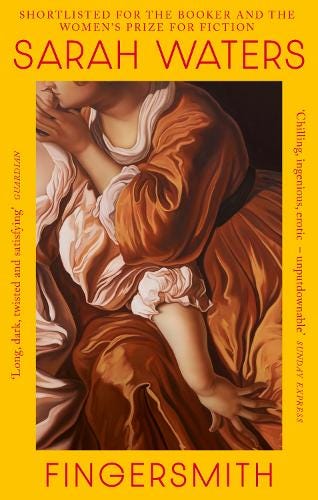
Fingersmith by Sarah Waters (2002) – 632 pages
I read this years ago on holiday and found it to be a lot of fun, and I’ve been meaning to read more Waters since. Instead, I found myself re-reading this one for Books on Film recently, so we could watch the Park Chan-wook version which transposes it from Victorian England to Japanese-occupied Korea.
On a second read I once again found it to be an entertaining read; it follows Sue Trinder, a “fingersmith” growing up in the East End of London. Fingersmith being slang for thief, of course. She is roped into a scheme to defraud a young heiress of her fortune, but there is more to this story than there seems to be. I found Waters captured a Dickensian spirit with this which I liked, and she was also inspired by sensation literature from the period (hence the plotting which becomes ever more ridiculous as the novel draws on).
But this time I also noticed the baggier parts a little more. For example, we get one entire section again from a different point of view, and I felt it could have done with some condensing in order not to cover repetitive ground. Still, I know Waters fans would encourage me to try something else of hers, and I certainly will.
Thanks so much for reading! Next month I’ll be covering Transcription by Ben Lerner, Solaris by Stanisław Lem, and Light in August by William Faulkner.
Catch up with my older posts . . .
Top Reads of 2025

I read 102 books in 2025, and many of them were really very good—today I’m going to share my top twenty-five with you.
February to April 2026 Reads

Martin MacInnes, Susie Boyt, Percival Everett, Han Kang, Kathryn Scanlan, Hisham Matar, Elizabeth Jane Howard, Hope Mirrlees, Susanna Clarke, and more
January 2026 Reads

Lorrie Moore, Per Petterson, Maria Popova, Audrey Schulman, Joaquina Ballard Howles
Otherwise, I’ll see you next time!
i’m so intrigued by missouri williams. i can’t wait to pick up the vivisectors, even if i’m going into it with lukewarm expectations 😅
Keen to read The Baron in the Trees soon!